We’re all looking for more convenient ways to get more protein and fiber in our diets – and the good news is, plant-forward eating is an easy way to help meet your nutrition goals. In fact, some of the easiest ways to eat more plants are already waiting for you in the grocery aisle. Think of plant-forward eating as an “add more” approach: more beans, lentils, soy foods, fruits, vegetables, whole grains and plant-based options, while still enjoying the foods you love. Many plant foods can provide important nutrients like fiber and protein, and convenient products make it easier than ever to work them into busy days.
Here are four simple categories to explore when you want to put more plants on your plate.
Canned Beans and Lentils - Open, Rinse, Eat: Canned beans and lentils are favorite go-to pantry items that can power your delicious plant-forward meals. They are affordable, versatile and incredibly convenient; and canned options mean there is no soaking or long cooking time required. Beans and lentils provide both plant-based protein and fiber, making them an easy way to add staying power to meals. A cup of cooked lentils provides about 18 grams of protein and 15 grams of fiber, and they can be seamlessly added to meals like Shepherd’s pie, mixed into your bolognese sauce, or a hearty weeknight soup. Keep a few cans of Nothing But the Truth Beans on hand for a quick pantry staple you can reach for whenever a meal needs a little more protein and fiber. Start by adding beans to meals you already make, like black beans to tacos, chickpeas to a salad, or white beans to soup. A little more plant protein and fiber can go a long way.
Plant-Based Milks – An Easy Everyday Staple: Plant-based milks make it simple to bring more plant-forward options into your routine without changing much at all. Pour them over cereal, blend them into a smoothie, stir them into oatmeal or use them in your favorite recipes. Soy milk is a particularly useful option because it provides protein and can be nutritionally similar to dairy milk. Ripple milk is another protein-rich option, providing 8 grams of protein per serving. Varieties can vary in protein, fiber, calcium and added sugar, so check the Nutrition Facts label and choose the option that best fits your needs.
Tofu and Soy – A Protein Powerhouse: If tofu has never made it into your grocery cart, consider this your invitation to give it a try! Soy foods, including tofu, tempeh, edamame and soy milk, are convenient ways to add plant protein to everyday meals. Soy is especially noteworthy because it provides complete protein, meaning it contains all nine essential amino acids. Look for convenient options like House Foods Tofu, which can be cubed, seasoned and air-fried for a crispy addition to grain bowls, stir-fries, salads or tacos. House Foods Tofu provides 7 grams of protein per 3-ounce serving. And don't overlook the freezer section! Edamame is an easy option to keep on hand. Simply heat and add to stir-fries, rice bowls, salads or pasta for a quick protein boost. Depending on the product, soy foods can also provide fiber, giving you another reason to make them a regular part of your plant-forward rotation.
Plant-Based Meats – Convenience Counts: Plant-based burgers, crumbles, nuggets, sausages and other meat alternatives can make plant-forward eating especially convenient. They're designed to fit into the meals you already know; think burgers, tacos, spaghetti, wraps and sandwiches so you don't have to completely rethink dinner. MorningStar Farms® Grillers® Crumbles are an easy option to keep in the freezer and can be added into recipes that traditionally use ground meat. Toss them into tacos, chili, spaghetti sauce or casseroles for a simple way to add plant-based protein to meals you already make.
The Bottom Line: The best nutrition habit is one you can actually stick with. That’s why convenience matters. Keep canned beans and lentils in the pantry, tofu or edamame in the refrigerator or freezer, plant-powered milk in the fridge, and a few convenient plant-based proteins on hand. And remember that plant-forward is about making plants a bigger and more frequent part of your plate while creating meals that are satisfying, flavorful and realistic for your lifestyle.
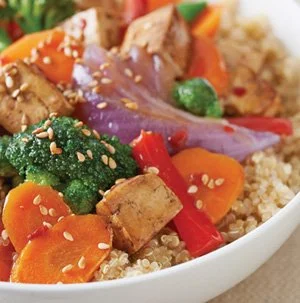
Tofu and Vegetable Stir-Fry with Ginger and Sesame
Serves: 5
All You Need:
14 oz. firm or extra-firm tofu, drained
4 tbsp. Hy-Vee light soy sauce
1 tbsp. rice vinegar
1 tbsp. grated fresh ginger or 1 tsp Hy-Vee ground ginger
2 tsp. minced garlic
1 tsp. toasted sesame oil
⅛ tsp. Simply Organic Red Pepper, Crushed
4 tsp. Hy-Vee canola oil, divided
1 (16 oz) bag Hy-Vee frozen stir-fry vegetables
2 tsp. Hy-Vee cornstarch
¾ c. Hy-Vee 33%-less-sodium vegetable broth
2 c. quinoa
1 tbsp. sesame seeds
All You Do:
Cut tofu into 3/4-inch cubes; place in a shallow baking dish. In a small bowl, whisk together soy sauce, rice vinegar, ginger, garlic, sesame oil and crushed red pepper. Pour over tofu. Cover and marinate for 10 minutes. Drain, reserving marinade.
In a large skillet, heat 3 teaspoons canola oil over medium-high heat. Add tofu to skillet. Cook 3 minutes without stirring or until tofu begins to brown. Using a spatula, stir tofu and cook 3 minutes more. Remove tofu from skillet; keep warm.
Add remaining 1 teaspoon canola oil and assorted vegetables to skillet; cook and stir for 2 to 3 minutes or until crisp-tender. In a small bowl, whisk cornstarch into vegetable broth, then whisk in reserved marinade; add to skillet. Cook and stir about 2 minutes or until thickened. Stir in tofu; heat through. Serve over quinoa. Sprinkle with toasted sesame seeds.
Recipe Source: Tofu and Vegetable Stir-Fry with Ginger and Sesame | Hy-Vee
The information is not intended as medical advice. Please consult a medical professional for individual advice. This content was powered by the Plant Based Food Institute.