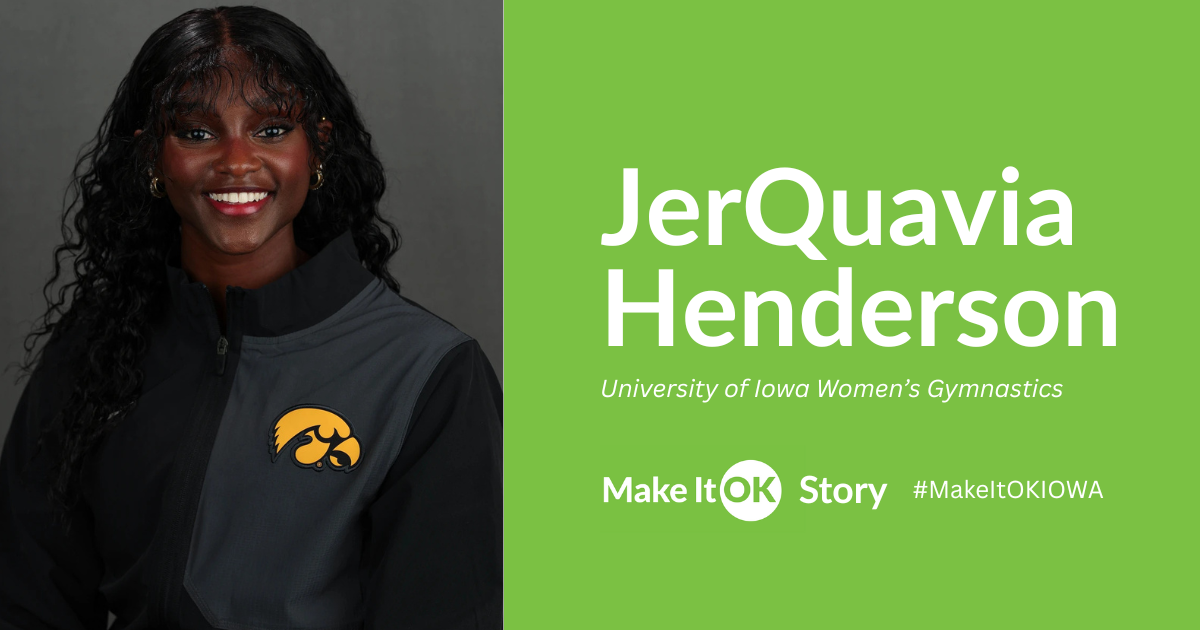
JerQuavia Henderson’s Story

University of Iowa women’s all-around gymnast, JerQuavia Henderson, has battled anxiety and panic attacks from a young age. As she’s gotten older, therapy, medication, and lots of hard work have helped her understand herself and the support she needs to succeed. This effort to not just understand but love herself is the throughline of Henderson’s journey with mental illness. In a world of so many opinions and so much information, she blocks out the noise by embracing what makes her unique and putting in the time to learn how to love herself.
Henderson, 24, and her parents knew at a young age that she was different. For years as a child and teenager, her undiagnosed ADHD, anxiety, and depression (or the one, two, three combo as she calls it) took a toll on her academic performance, her physical health, and made her feel different from other kids. While she would get excellent grades on low pressure homework assignments, things like exams would stress her mental health to the breaking point.
“During tests I would have so much built-up anxiety and stress that my brain and body would shut down. I would fall asleep during exams or get so anxious I almost vomited, I couldn’t focus. I had to leave the classroom because I felt hot,” She said. Henderson didn’t know what was happening to her at that age. “I just thought, ‘oh well, I’m just really stressed out because I don’t know what I am talking about.’”
This stress combined with an extremely busy and demanding schedule after school continued to put pressure on her mental health. On top of her normal expectations as a student through elementary and high school she had packed schedules in the mornings and nights.
“I would have to come in before school for math and science tutoring, then come in after school for even more tutoring and homework help. Then I would go to practice right from school, get home, have dinner, then I would be up until midnight or 1 a.m. doing homework. I just wasn’t sleeping as much as I should have.”
This routine of exhaustion and constantly battling her mental health struggles continued for years and made her feel different than others. “You ask yourself, what is wrong with me,” she said. “Why can’t I function like everyone else?”
When she arrived at the University of Iowa to begin college and to continue competing as a gymnast, she reached a tipping point. During a practice her freshman year at the end of 2019, Henderson ruptured her Achilles tendon.
In an interview with the Daily Iowan, Henderson touched on her experience battling through injury, the mental toll it took, and how it gave her time to explore herself and find her value outside of gymnastics.
“The lesson that I learned the hard way, being with an injury, is that I am so much more than a gymnast. Once I did get injured, I had to figure that out for myself, and it was the hardest thing I have had to do in my entire college career.”
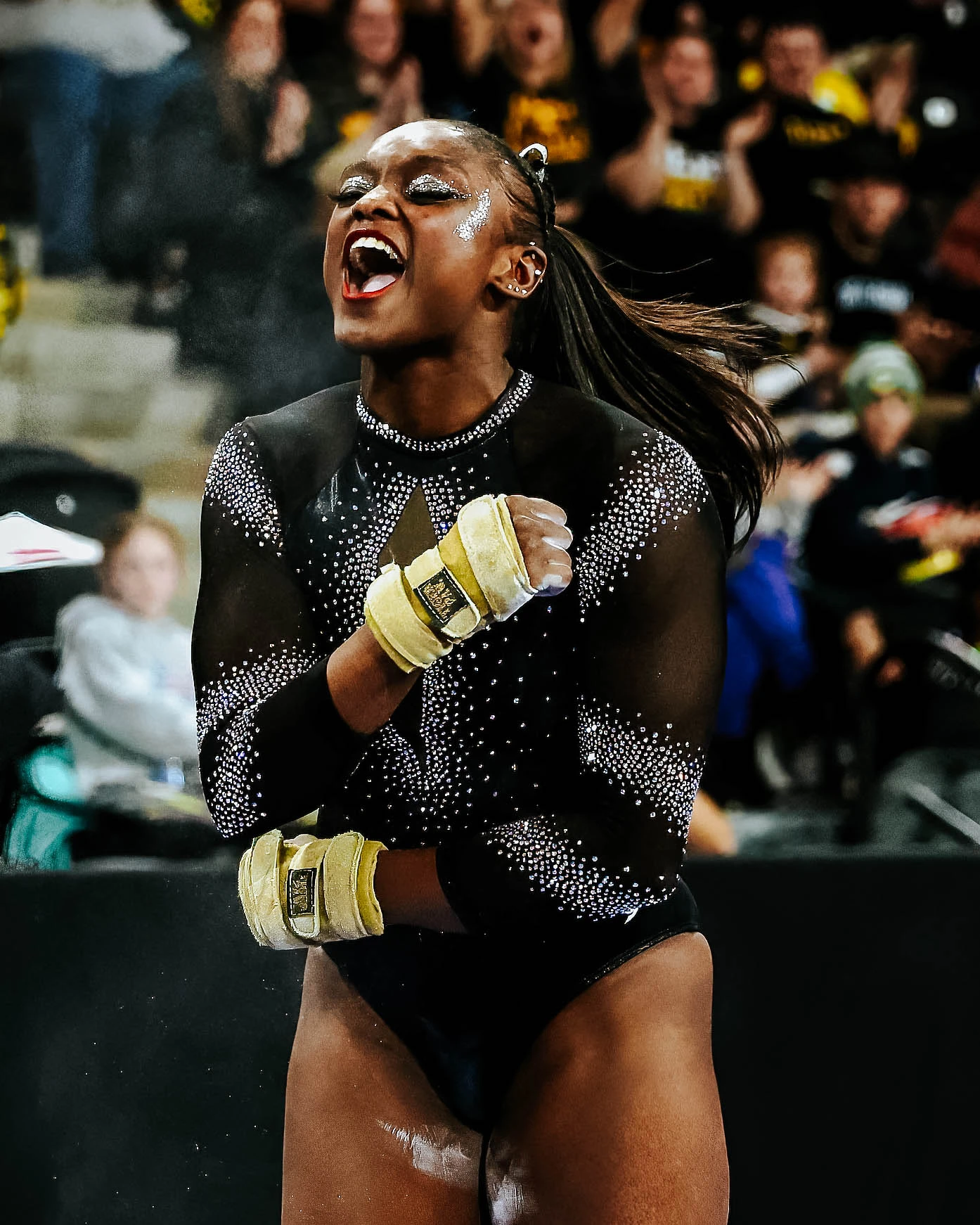
The following year, Henderson sought help from a professional and was officially diagnosed with ADHD, anxiety, and clinical depression. Receiving an official label to explain how she had felt for most of her life was a revelation.
“I’m not just going through all these feelings for nothing. There’s something going on within my system that’s not regulated, that’s not right. I think finding that out was the biggest turning point. It’s just nice to put a name to what I’m feeling.”
After being diagnosed, Henderson did her own research into her diagnosis and decided to begin taking medication. The change in her day-to-day life was immediate and eye opening. Where she used to struggle getting through every class, losing focus and fidgeting, she sat still for the first time. “I remember going to my coach and saying, ‘This is how people feel every day? This is what normal feels like? That’s crazy! It’s like an entirely new world,” she said.
Her success in addressing some of her mental health concerns motivated her to continue working on herself. She focused on therapy and putting in the necessary work to understand her mental illness. She quit trying to make a “normal” routine work for her and began embracing what she needed to feel her best. Things like finding time for a nap here, making time to be alone and recoup there, all helped her feel productive and ready to tackle all the expectations and responsibilities of a student athlete.
Henderson’s hard work over the past five years has gone to what she says is the most important relationship in all of our lives. “The most important and the longest relationship you will ever have is with yourself. You have to invest in that relationship,” she said.
She recalled when her therapist first asked her to say three things she liked about herself in the mirror every day. Something so small that started out hard ended up being transformative for her as she fought to accept who she was, from her appearance to her personality. “It was hard. I hated it. And even though I didn’t believe it in the moment after a while you do start to believe [the things you say]. I do like the color of my eyes, I do like my hair, I do like this color on me. I know it sounds silly because it is, but you start to believe it.”
“I had to learn to like me, but I couldn’t figure out at what point I started not liking myself. So, I had to go backwards and forwards and backwards again until I figured it out,” Henderson said.
Growing through exercises like these in therapy she says, is the hardest but most rewarding part of her journey so far. Deciding that you like yourself, and making the time to spend with yourself, free from distractions, is a goal Henderson says everyone should focus on
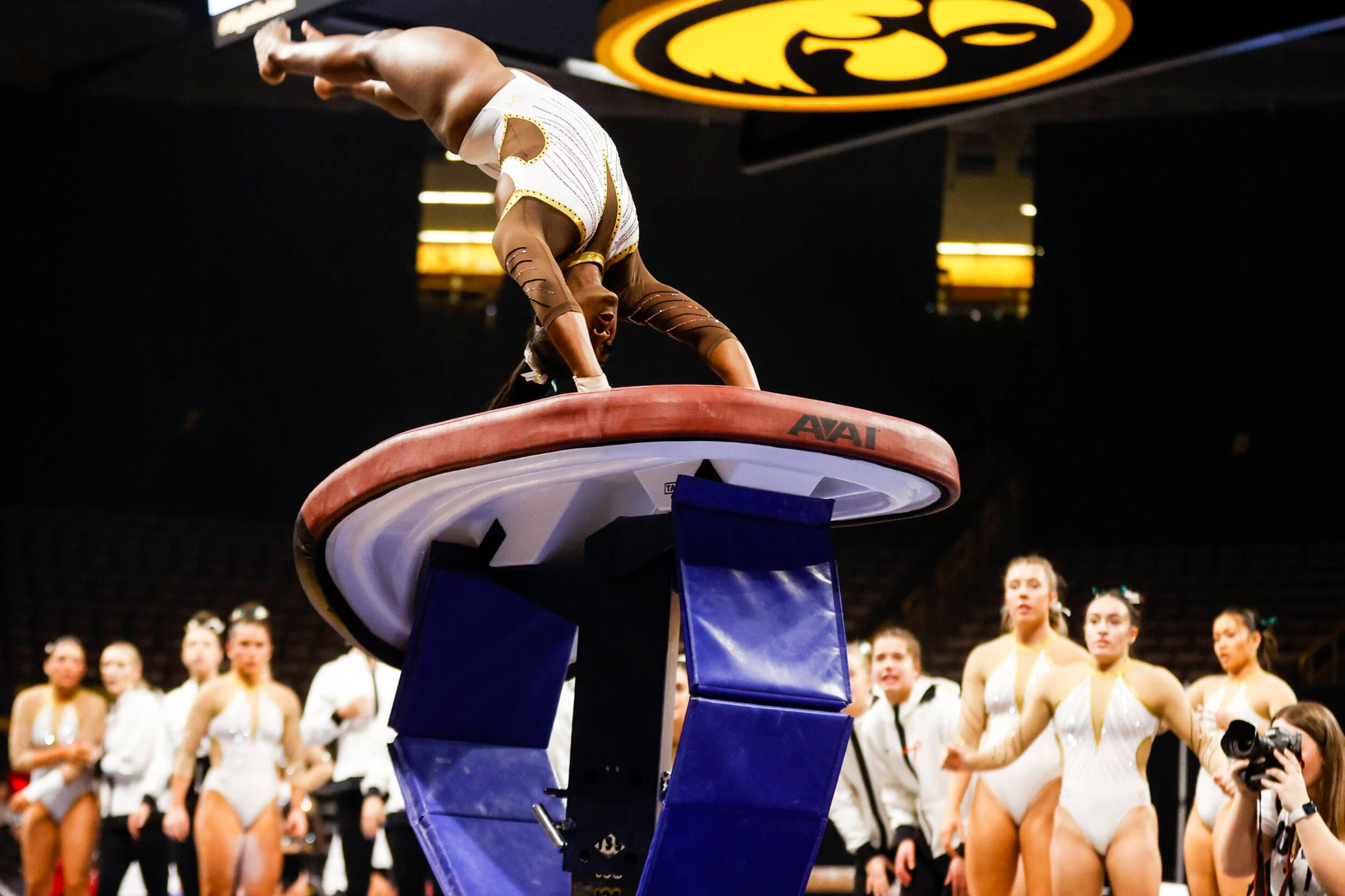
Today, she isn’t free from the impacts of her ‘one, two, three combo’, but her self-exploration has helped her find tools and supports to make it more manageable. Her friends know the signs she shows when she is stressed or anxious, and they know how to be there for her when she isn’t ready to ask for help yet. “I can only do so much to make sure that my body and my system is regulated. Even on days when I do end up having a panic attack at the gym my trainer and I have been through it enough to know to get low to the ground and take a break,” she said. “It doesn’t happen nearly as much as it used to, it used to be at least once a week.”
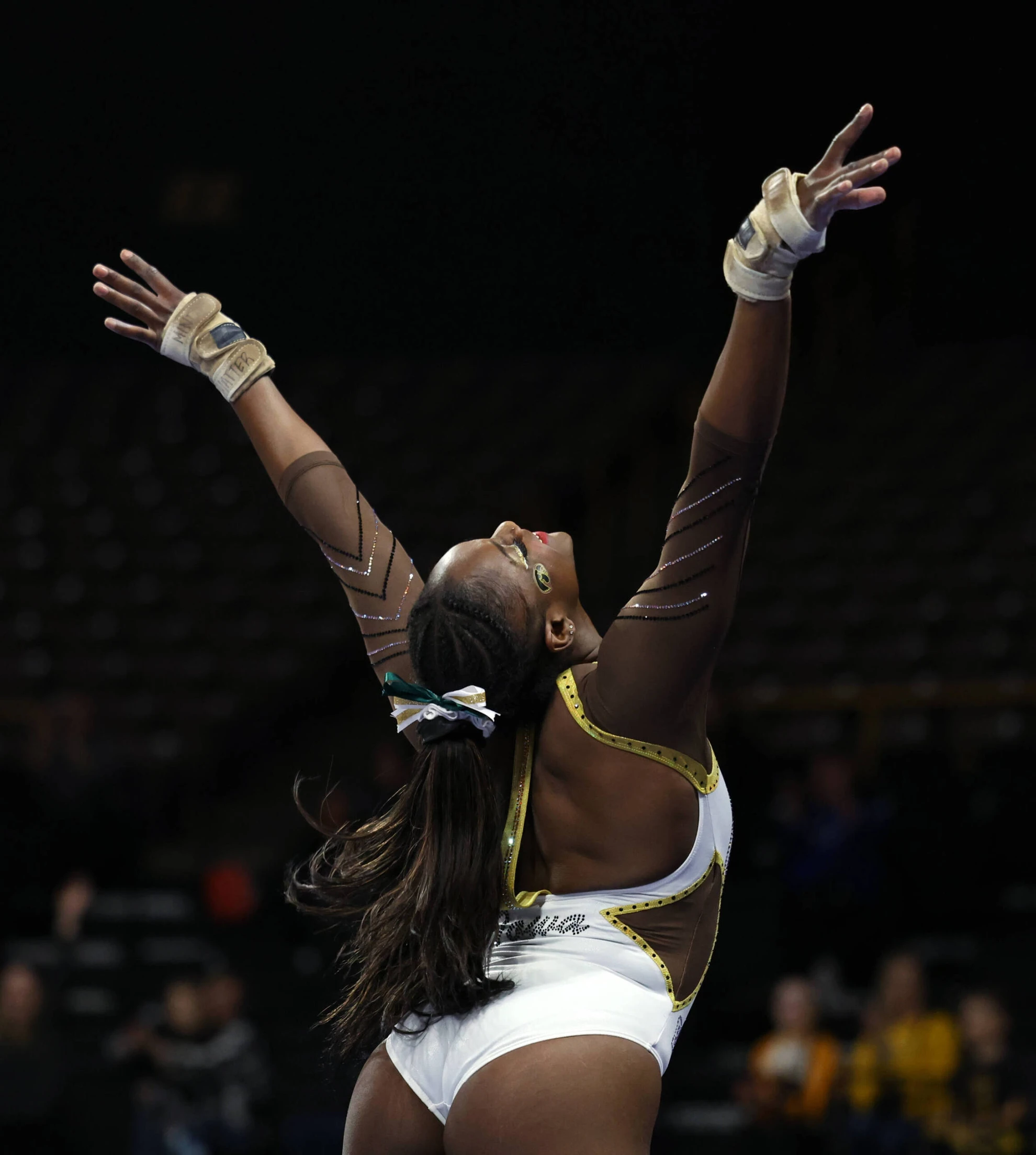
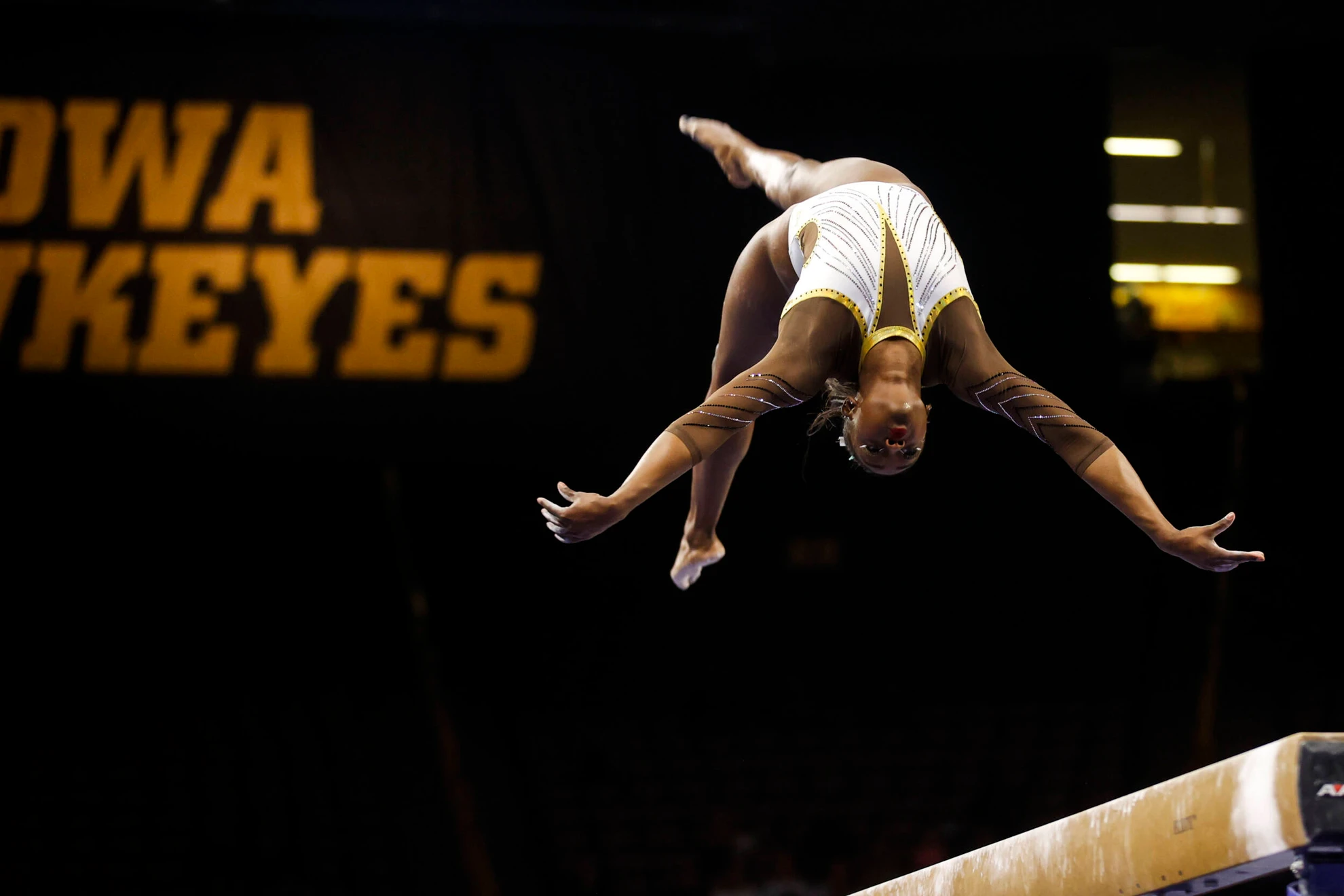
Where the weight of competing as a college athlete seems like something that could compound the issues she faced, through the years being in the gym has been the one place where Henderson usually has a clear mind.
“Oddly enough, I genuinely forget I have ADHD when I do gymnastics. Maybe it’s the hyperactive side of it, getting energy out of my body, but I think I have done it for so long it’s just another thing. It’s easy for me to come in the gym and everything just goes away,” she said.
Being a college athlete can also draw attention and outside opinions, something she says also has never bothered her. If she finished a routine and felt good about it, she’s proud of herself. Her focus remains on the work she put in and moving forward.
“I’ve never really cared about other people’s opinions. Your opinion doesn’t disprove anything I feel myself. I tend not to look at those things. I’m proud of myself, end of discussion, next event.
Henderson is now in her fifth year at the University of Iowa where she has earned three first-team All-Big Ten selections, is a three-time All-American, and earned the 2021 College Gym News Comeback Gymnast of the Year after her Achilles injury. But in our nearly hour-long discussion none of that came up. What did come up frequently was her self-reflection, her growth over the last five years, and her advice to others going through what she has.
“There’s always going to be people in your ear telling you things and opinions. At the end of the day the voice you have to listen to and the feelings you have to feel constantly are your own,” she said. “For me, I think I’ve finally gotten to a point where I really love myself.”